
From Shop-Floor Problem to Measurable Result
Real projects, documented end to end — how the problem was identified, how the solution was proven on site, and how operation improved step by step.
A Large Pulp Mill in China: On-Line High-Pressure Washing for Washers
A capacity upgrade does more than raise output — it imposes harsher duty on every piece of equipment. This project started with a trial on a single washer and ended with a mill-wide standard.
Background & Problem
In 2019 the mill raised the feed pressure of its washers to increase capacity. With the new operating point, the vat pressure stayed persistently high and a chain of problems followed:
- High vat pressure led to frequent seal failures and repeated stock leakage, driving up maintenance frequency and spare-part consumption
- Reduced permeability of the filter plates (filter screens) caused poor and uneven washing
- Chemical carry-over in the discharged pulp rose, directly affecting downstream stages and pulp quality
Diagnosis on site: fibre and debris gradually blocking the filter holes was the common source of the rising vat pressure, the damaged seals and the deteriorating washing. Replacing seals alone only relieved the symptom — the problem came back.
Our Solution
Feed pressure, operating vat pressure and the condition of the filter plates were reviewed together. The conclusion: falling plate permeability — not a simple seal quality issue — was causing both the seal failures and the poor washing.
An on-line high-pressure washing system was installed on one washer first: high-pressure water is sprayed continuously onto the filter plate surface from outside the drum, knocking off attached fibre and debris and restoring open filter holes. After a period of operation, the improvement was clear.
Based on the trial results, the remaining washers were equipped one after another, forming a mill-wide on-line cleaning standard that starts and stops automatically with the washer and cleans on a set cycle.
Results
Vat pressure returned to a controllable range; seal failures and leakage dropped sharply, and unplanned maintenance fell noticeably.
Washing performance improved and chemical carry-over in the discharged pulp was reduced, giving downstream stages a more stable furnish.
Spare-part consumption and downtime losses fell together, so the investment was recovered within a short period.
From proving the result on one machine to stable operation across the whole mill — this is how we approach every project: find the real cause on site, then let verified results speak.
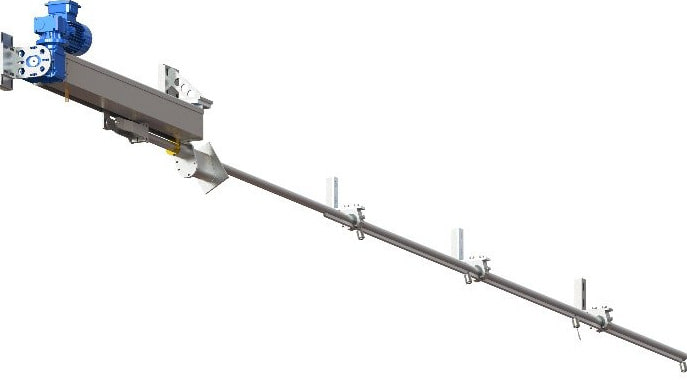
A Large Tissue Mill Abroad: Restoring Water-Jet Turn-Up on Five High-Speed Tissue Machines
Equipment that is bought but never used costs more than no equipment at all. This project put five turn-up units back to work after more than six years idle.
Background & Problem
Five 5600 mm high-speed tissue machines at the mill were supplied with water-jet turn-up units when they started up nine years ago. Because the turn-up success rate was low, the units were never put into normal service and had been out of use for more than six years.
- Low turn-up success rate — the units could not meet the continuous-production demands of high-speed tissue machines
- Long idle time left hardware aged and programs out of step with the current production rhythm
- All five machines kept using their original turn-up method, limiting efficiency and roll quality
The customer's request was clear: not another new system, but making the existing units on site actually work.
Our Solution
Invited by mill management, we were on site in June 2026 and surveyed the turn-up units on all five machines: mechanics, water circuit, controls and programs. The recovery plan and implementation schedule were presented on site.
Within three months of approval the equipment arrived on site: about 60% of the hardware — aged and unreliable components — was replaced, and the control programs were re-optimised so the turn-up sequence matched the high-speed tissue machines.
No extra downtime was requested. Installation, commissioning and turn-up verification were carried out one machine at a time during the 1–10 hour stops that occur in normal production — until all five units were back in service.
Results
Turn-up units idle for more than six years are running again, with turn-up behaviour matched to high-speed operation.
All work was completed inside existing production stops, without disturbing the production plan.
The original units were brought back at far less than the cost of new systems, and the customer accepted the result.
Idle equipment is not necessarily scrap. With the right diagnosis, the right parts and correctly tuned programs, existing assets can create value again.
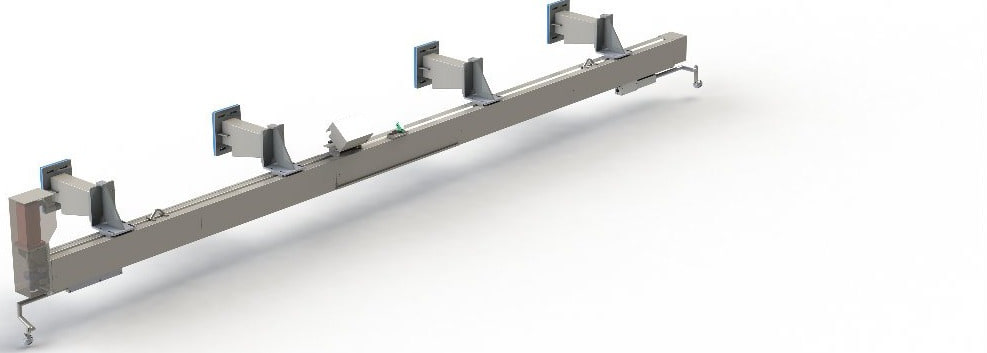
A Large Pulp Mill in China: Anti-Rewetting Devices on 15 Twin-Roll Washers
After the capacity upgrade the speed went up — and the consistency came down. A device fitted to the drum brought the dewatering performance back.
Background & Problem
To raise output, the mill increased washer speed. With higher speed the pulp mat spends less time dewatering on the drum, and washing performance dropped noticeably across fifteen twin-roll washers on site:
- Discharge consistency stayed low, between 23% and 28%, short of the required dewatering result
- Rewetting — water already removed soaking back into the mat on the drum — diluted the discharged stock
- Low consistency meant high chemical consumption and high residual alkali, hurting both washing efficiency and operating cost
The upgrade was meant to produce more, but with consistency stuck low, both output and quality were held back.
Our Solution
Together with the customer we reviewed speed, vacuum, showering and discharge consistency data after the upgrade. The conclusion: intensified rewetting at higher speed was the main cause of low consistency and high residual alkali.
At the customer's request, an anti-rewetting device was installed on the washer drum to block filtrate from seeping back into the pulp mat. Consistency improves without reducing speed or output.
After the first unit verified the result, the remaining fourteen twin-roll washers were equipped one after another, giving the mill one consistent dewatering solution.
Results
The result exceeded expectations: consistency, washing and chemical consumption all improved without sacrificing output — and production reached a record high.
Dewatering problems after a speed or capacity upgrade rarely require replacing the whole machine. Find the rewetting stage, and a retrofitted device can win the loss back.
More Cases
The Next Case Could Be Your Mill
Turn-up, threading, fabric cleaning, edge trimming and slitting, equipment repair — if you are facing a similar problem, tell us about your operating conditions.
We would rather listen first: machine type, paper grade, speed, and where and how often the problem occurs. Our engineers will give you an assessment and a workable approach before we talk equipment.
Discuss Your Problem